Source a and c weighted digital noise level meter for Lab, Site, and Compliance
Find and compare 30 a and c weighted digital noise level meter options from verified Chinese manufacturers. Evaluate features like ISO13485 certification, recording capabilities, and measurement ranges to select the right tool for industrial, environmental, or laboratory noise monitoring applications.
Key considerations
Products List






Comprehensive Sourcing Guide
A and C Weighted Digital Noise Level Meter Sourcing Guide
Procuring a digital noise level meter with both A and C frequency weighting capabilities requires a disciplined approach to technical verification and supplier qualification. These instruments are essential for environmental monitoring, occupational health and safety assessments, and industrial noise control projects. The core value lies in the device’s ability to capture the full spectrum of sound pressure levels, providing data that is critical for regulatory compliance and risk mitigation. Buyers must navigate a market where specifications vary significantly between models, ensuring that the selected unit meets the precise acoustic requirements of the intended application.
This guide synthesizes observed market data and trusted category knowledge to help procurement professionals make informed decisions. By focusing on verifiable attributes such as sampling frequency, resolution, and storage capacity, buyers can avoid common pitfalls associated with under-specified equipment. The following sections detail the product scope, technical verification steps, compliance documentation, cost structures, supplier evaluation criteria, and long-term maintenance considerations. This structured approach ensures that the final acquisition aligns with both technical performance needs and commercial viability.
Product Scope and Observed Listing Signals
The current market for digital noise level meters presents a wide range of options, with observed prices spanning from approximately $3.06 to $547 USD. This broad spectrum indicates a segmentation between basic handheld units and more sophisticated, data-logging models. The minimum order quantity (MOQ) typically ranges from 1 to 60 units, suggesting flexibility for both single-unit pilot purchases and bulk industrial deployments. Buyers should note that lower price points often correlate with simpler functionalities, such as the absence of recording capabilities or limited storage, which may not suffice for long-term environmental monitoring projects.
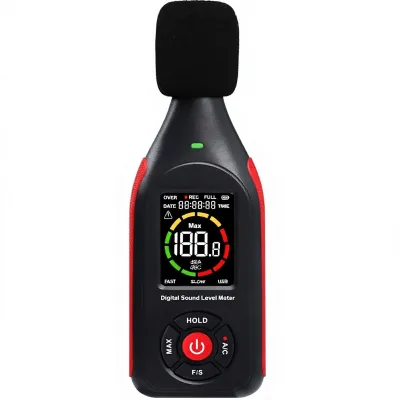
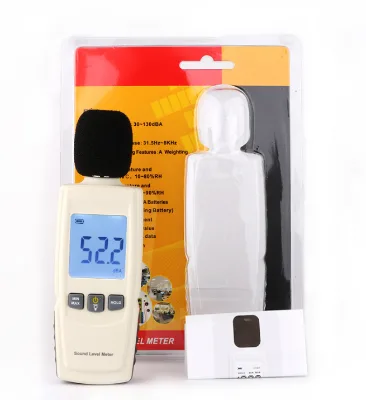
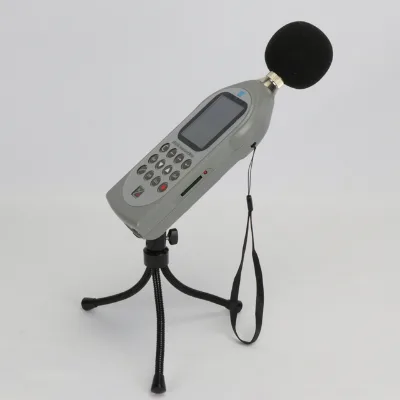
Observed product attributes reveal distinct functional tiers within the category. For instance, some models feature digital displays and recording functions with storage capacities exceeding 17,000 sets of measurements, allowing for extensive data collection without immediate data transfer. In contrast, other listings indicate models without recording functions or storage capacity, suitable only for real-time spot checks. The measuring range for high-confidence models typically spans from 30 to 130 dBA and 35 to 130 dBC, with a resolution of 0.1 dB, ensuring precision in both quiet and loud environments. Understanding these signal differences is crucial for matching the tool to the specific noise profile of the worksite.
Technical Specifications to Verify
When evaluating technical specifications, the sampling frequency and frequency weighting characteristics are paramount. Trusted category knowledge and observed data confirm that reliable meters should support both A and C frequency weightings, which are standard for assessing human hearing damage risk and low-frequency noise, respectively. The sampling frequency, observed at 2 samples per second for certain models, determines how well the device captures transient noise events. Buyers must verify that the sampling rate is sufficient for the dynamic range of the noise environment, as slower sampling may miss peak levels critical for safety assessments.
Resolution and measurement range are equally critical for data integrity. A resolution of 0.1 dB allows for fine-grained analysis, which is necessary for distinguishing between similar noise sources or tracking subtle changes over time. The standard measuring range of 30-130 dBA ensures coverage from typical office environments to heavy industrial settings. Additionally, the record interval, which can range from 1 second to 10 minutes, offers flexibility in data logging strategies. Procurement teams should confirm that the selected model’s interval settings align with the regulatory reporting requirements of the target industry, ensuring that the data collected is both comprehensive and compliant.
Compliance and Safety Documentation
Compliance with international standards is a non-negotiable aspect of sourcing acoustic measurement equipment. The IEC 61672 standard is the globally recognized benchmark for sound level meters, defining performance requirements for precision and accuracy. While specific certification status for every listed model may not be explicitly detailed in all listings, buyers must request proof of IEC 61672 compliance from suppliers. This standard ensures that the A and C weightings are applied correctly and that the frequency response falls within acceptable tolerances, which is vital for legal defensibility in noise violation cases.
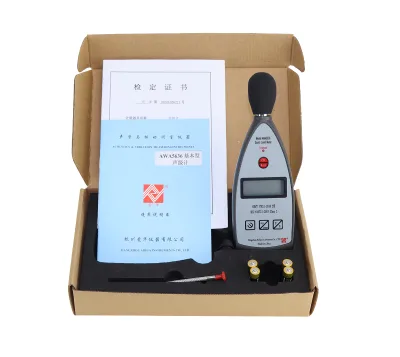
Beyond acoustic standards, general quality management certifications provide insight into the manufacturer’s reliability. Observed data indicates that some suppliers hold ISO 13485 certification, which pertains to medical devices, suggesting a high level of quality control and traceability in their manufacturing processes. Although this certification is specific to medical equipment, its presence may indicate a rigorous approach to quality assurance that could extend to other precision instruments. Buyers should inquire about the specific calibration certificates provided with each unit, ensuring that the meters are traceable to national or international standards upon delivery.
Cost Drivers and Commercial Terms
The cost of a digital noise level meter is influenced by several key factors, including recording capabilities, storage capacity, and connectivity features. Models with extensive storage, such as those capable of holding 17,280 sets of measurements, typically command higher prices due to the internal memory and data management software required. Similarly, units with wireless connectivity or advanced anti-jamming features may be priced at the higher end of the observed range. Buyers should assess whether these premium features are necessary for their operational workflow, as basic real-time monitoring may not require extensive data logging.
Commercial terms, including MOQ and packaging, also impact the total cost of ownership. The observed MOQ range of 1-60 units allows for scalable purchasing, but bulk orders may offer better per-unit pricing. Packaging details, such as carton or box packaging, should be considered for logistics and protection during transit. Additionally, the weight of the device, ranging from 0.15 kg to over 100g, affects portability and user fatigue during extended field use. Buyers should balance the initial purchase price with the long-term value provided by features like waterproofing or shakeproof construction, which may reduce replacement costs in harsh environments.
Supplier Qualification and Quality Control
Supplier qualification begins with verifying the origin and manufacturing capabilities of the provider. Observed data indicates that products originate from various locations in China, including Shenzhen and Qingdao, Shandong Province. Buyers should assess the supplier’s reputation and history in the acoustic measurement industry, looking for evidence of consistent quality and after-sales support. The presence of customization options suggests that some suppliers can tailor devices to specific requirements, which may be beneficial for specialized applications. However, buyers must ensure that customizations do not compromise the core acoustic performance or compliance with standards.
Quality control processes should be rigorously evaluated to ensure that each unit meets the specified technical parameters. Buyers should request sample units for independent testing before committing to large orders. Key tests include verifying the accuracy of the A and C weightings, checking the resolution and sampling frequency, and assessing the durability of the device under typical field conditions. Suppliers who provide detailed test reports or allow for third-party verification demonstrate a higher level of transparency and confidence in their products. Establishing a clear quality agreement with the supplier can help mitigate risks associated with inconsistent performance.
Long-Term Procurement Checks
Long-term procurement success depends on the availability of calibration services and spare parts. Digital noise level meters require regular calibration to maintain accuracy, so buyers should confirm that the supplier or a local partner offers reliable calibration services. The frequency of calibration should align with regulatory requirements and usage intensity, typically annually or after significant impacts. Additionally, the availability of replacement batteries and microphones is crucial for minimizing downtime. Buyers should inquire about the expected lifespan of these consumables and the cost of replacements to budget for ongoing maintenance.
Data management and software compatibility are also key considerations for long-term use. Models with recording functions generate large datasets that need to be transferred and analyzed using compatible software. Buyers should verify that the provided software is user-friendly, supports the required data export formats, and is compatible with their existing IT infrastructure. Furthermore, the ability to update firmware can extend the life of the device by adding new features or improving performance. By planning for these long-term needs, procurement teams can ensure that their investment in digital noise level meters continues to deliver value over time.
FAQs
What is the measuring range of the a and c weighted digital noise level meter?
The measuring range is 30 to 130 dBa and 35 to 130 dBc. This range covers typical environmental and industrial noise levels. The device provides a resolution of 0.1 dB for precise readings.
Can the a and c weighted digital noise level meter store measurement data?
Yes, the device can store up to 17,280 sets of measurements. It supports a recording function with intervals from 1 second to 10 minutes. This allows for comprehensive data logging during extended monitoring sessions.
What is the sampling frequency of the a and c weighted digital noise level meter?
The sampling frequency is 2 per second. This rate ensures accurate capture of noise fluctuations. The device uses digital display technology to present the data clearly to the user.
Which certification does the a and c weighted digital noise level meter hold?
The product holds ISO13485 certification. This standard indicates adherence to quality management systems. It is relevant for buyers requiring certified medical or technical equipment in their supply chain.
What is the physical size and weight of the a and c weighted digital noise level meter?
The dimensions are 78*80*38mm and the weight is 0.5 kg. This compact size makes it suitable for handheld use. The design supports portability for field measurements in various environments.
Is customization available for the a and c weighted digital noise level meter?
Yes, customization is available for this product. Buyers can request specific modifications to meet their operational needs. This flexibility supports tailored solutions for different industrial or environmental monitoring applications.
What is the origin of the a and c weighted digital noise level meter?
The product originates from China. This location is common for electronic measurement equipment manufacturing. Buyers should verify specific supplier locations and logistics options during the sourcing process.